Reframing mystery: from stone to nature
Nature in contemporary art and the shift from historical form to organic abstraction

From classical sculptural reinterpretations to abstract nature painting, this essay explores a structural shift in the role of mystery and presence within Dario Moschetta’s work.
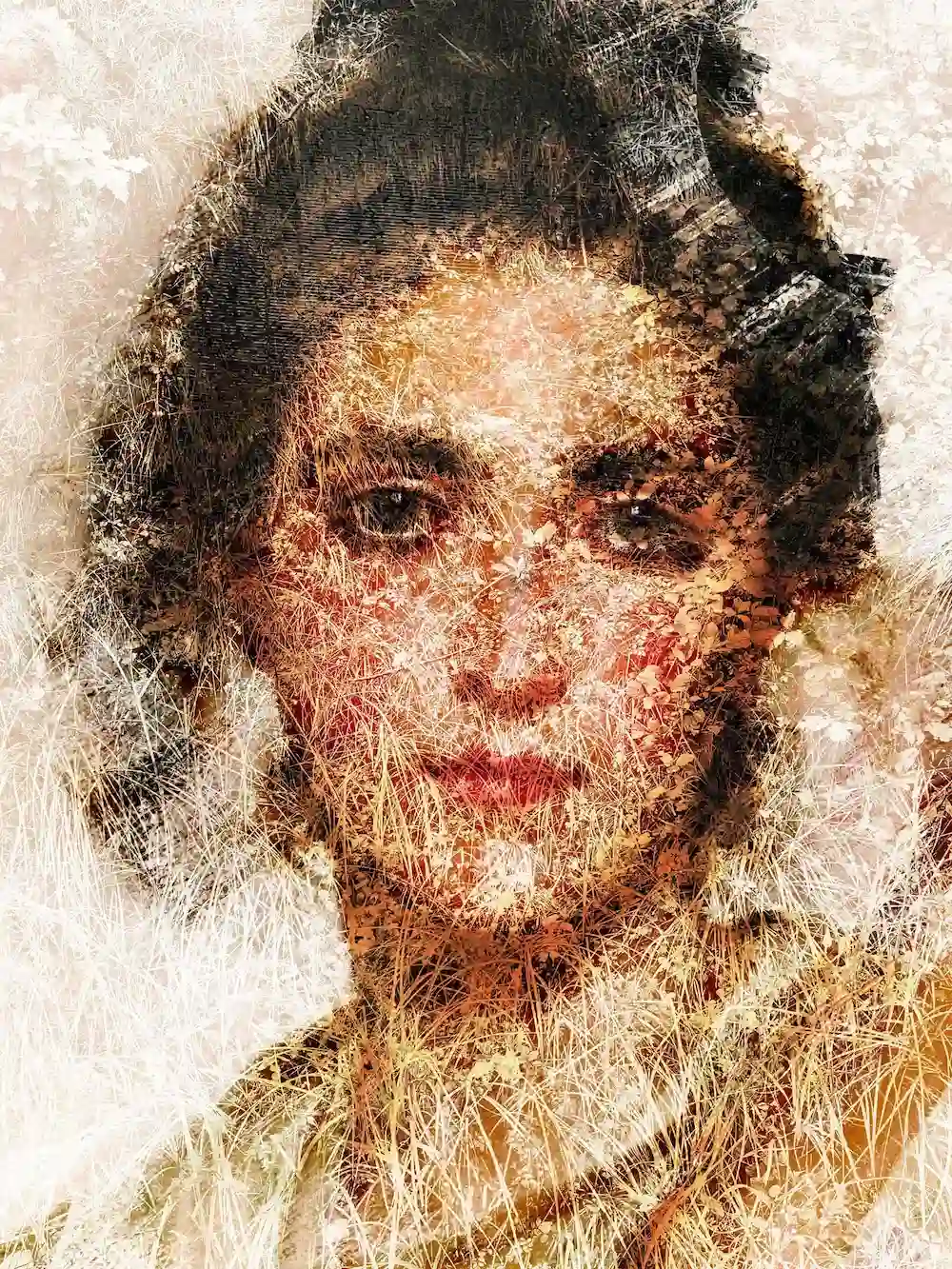
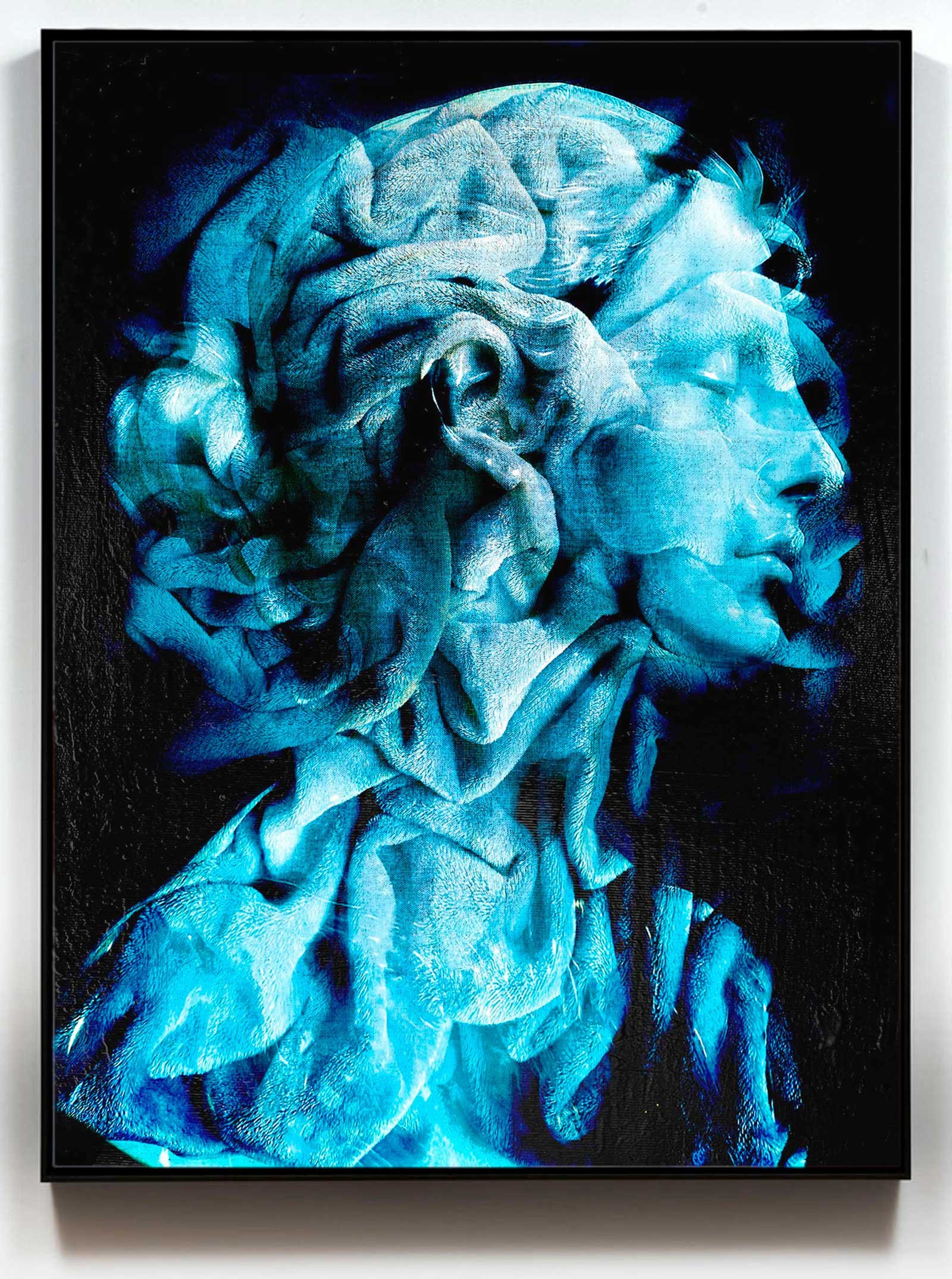
For years, Dario Moschetta’s work engaged directly with classical sculptural heads. These figures were derived from ancient statues encountered in museums, private collections and architectural remnants scattered across towns such as Castelfranco Veneto and Cittadella. They belonged to civilizations historically remote and conceptually distant from our contemporary condition.
The challenge was not decorative reinterpretation but conceptual confrontation. How can a contemporary painter reactivate a form already saturated with centuries of meaning? The classical head carries erosion, fracture and absence within its surface. It carries time. It carries the unfinished.
Yet over time a realization emerged. Instead of unveiling history, the paintings were intensifying its opacity. Rather than clarifying the past, the work was thickening its mystery.
Confronting time through inherited form
The classical phase was driven by an attempt to penetrate historical distance. Ancient figures resemble us physically, yet they belong to belief systems and social structures radically different from our own. They feel almost alien. The paintings sought to bridge that distance.
However, time resists dissolution. The more the subject was analyzed, the more estrangement surfaced. The non-finito of ancient sculpture became mirrored in the paintings themselves. Fragmentation and ambiguity increased instead of resolving.
At that point, mystery ceased to be something to solve. It became something structural.
This limit marked the beginning of a shift.
From historical distance to living presence
The transition toward the Sunlight Blooms series did not originate as a thematic choice. It emerged as a reorientation. The classical subject arrived already encoded with meaning. Nature, by contrast, presented itself as immediate and processual.
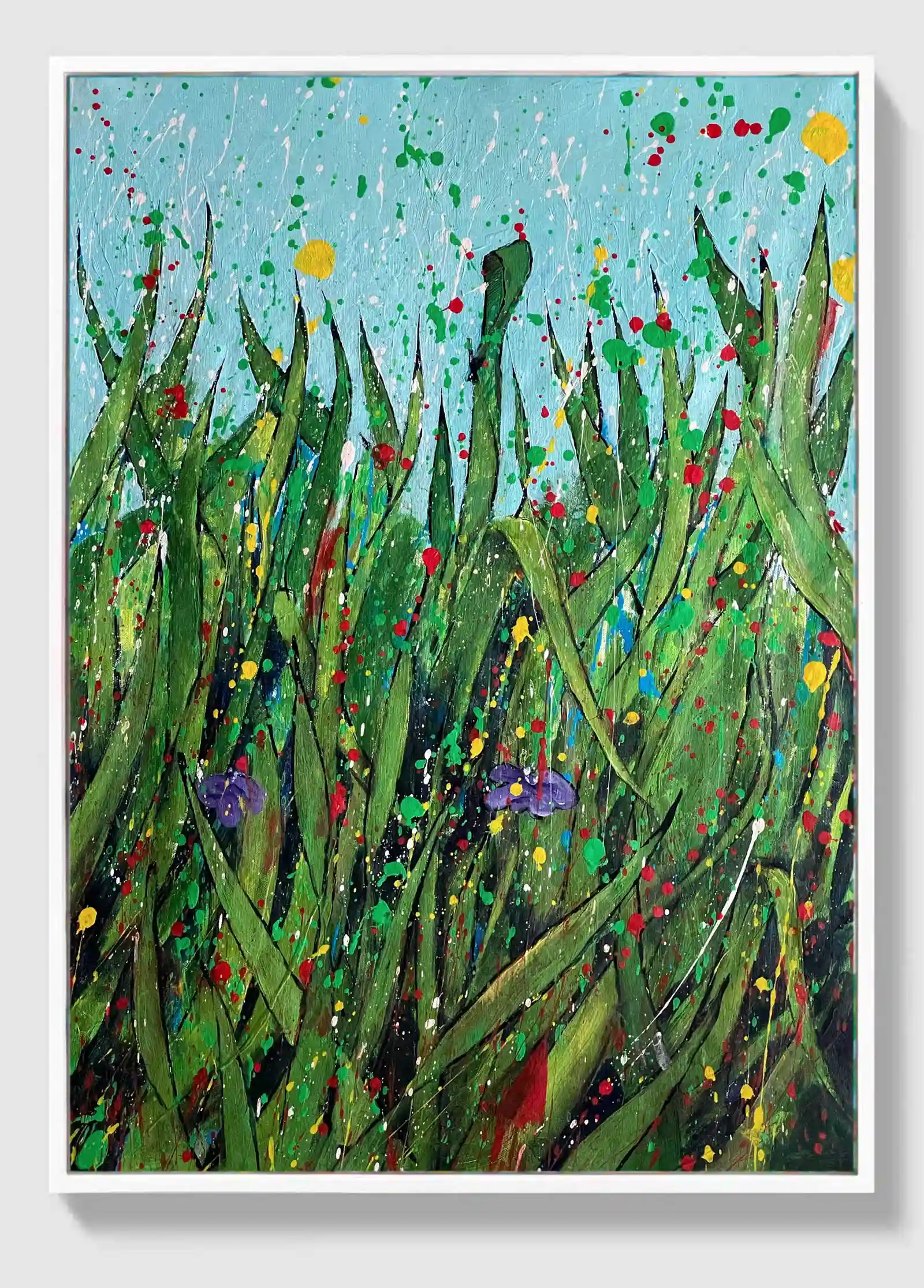
Grass, pollen suspended in warm air, roots deforming soil, bark layered by growth, small eruptions of blossoms in sunlight. These were not symbols but phenomena. They were not historical relics but living systems.
This movement from stone to organic matter represents more than a stylistic change. It marks a structural shift from interpreting inherited form to engaging with vitality.
In this sense, nature in contemporary art becomes not a decorative theme but a field of investigation.
Abstract nature painting as process
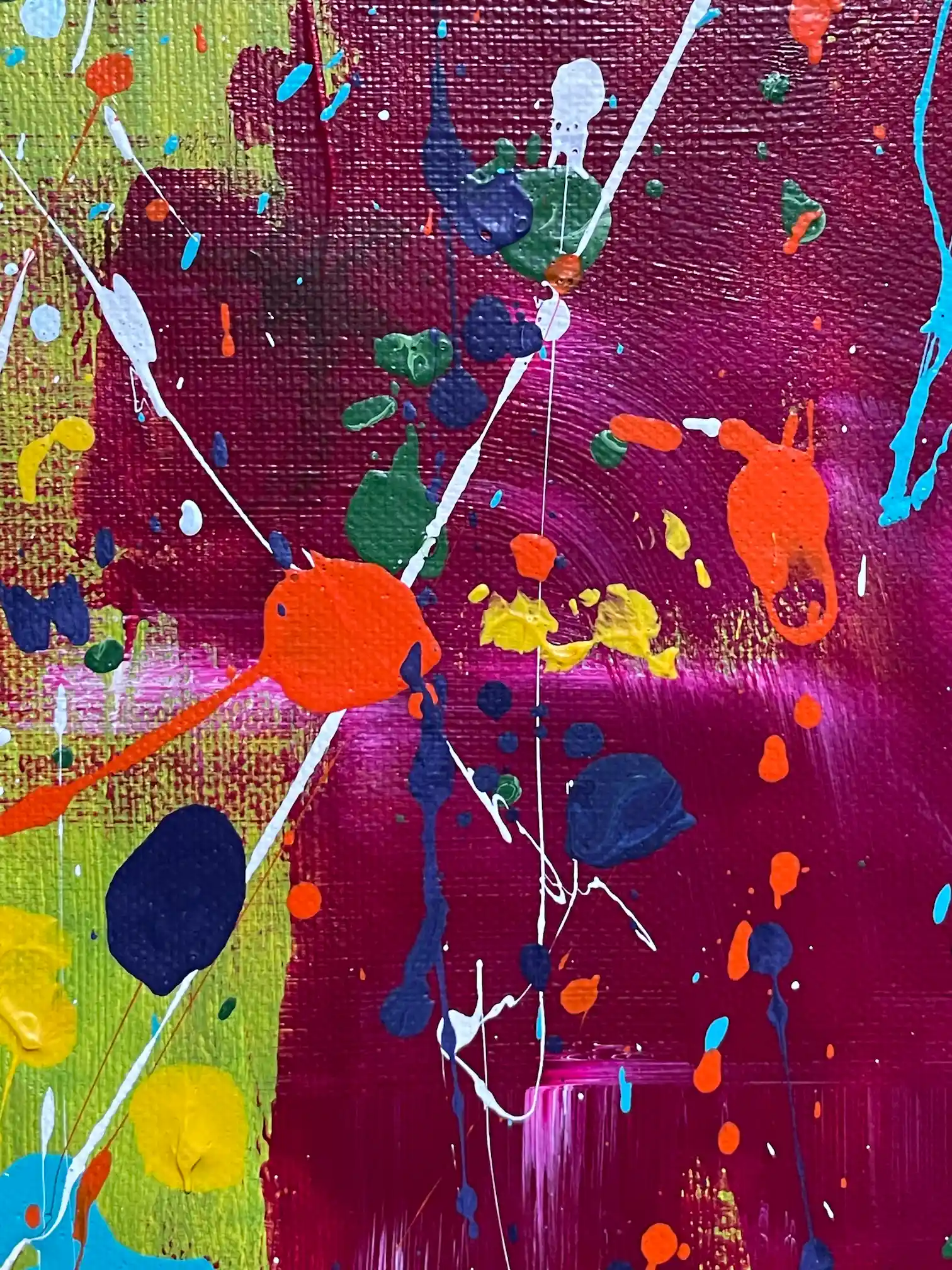
Sunlight Blooms develops as a body of abstract nature painting that operates through vibration and dispersion rather than representation. Color spreads across the surface. Layers accumulate. Gestures collide. Growth becomes visual rhythm.
These paintings do not aim to depict identifiable species or botanical accuracy. Instead, they function as fields of energy where abstraction mirrors organic dynamics.
Pollen becomes gesture. Roots become directional force. Blossoms become chromatic eruption.
The result is not illustration but process.
Mystery relocated
The earlier classical works positioned mystery within historical opacity. In Sunlight Blooms, mystery is relocated to the complexity of living systems. Nature is not transparent. It is layered, indifferent and structurally intricate.
Werner Herzog once described the Amazon forest as “obscene” in its overwhelming vitality. That perspective captures something essential. Nature does not sentimentalize itself. It simply operates.
To engage with it visually requires humility rather than domination.
Within this framework, nature in contemporary art becomes an exploration of coexistence rather than control.
An ecological undercurrent
The ecological dimension of Sunlight Blooms remains subtle but present. The paintings do not preach environmental ideology. Yet they acknowledge dependency. We inhabit what we depict.
If the forest, the field and the atmosphere are structural conditions of life rather than decorative scenery, then abstract nature painting becomes a meditation on presence and respect.
The luminous surfaces are not celebratory ornament. They are reflections on interdependence.
Structural evolution
The passage from classical reinterpretation to abstract nature painting should not be interpreted as experimentation for its own sake. It represents a recalibration of inquiry.
One phase confronted time as distance. The current phase confronts existence as immediacy.
Mystery persists, but its origin changes. It no longer stems from historical alienation but from organic complexity.
Nature in contemporary art today
In the broader context of nature in contemporary art, this shift aligns with a growing awareness that abstraction can function as ecological consciousness without becoming illustrative.
The work does not narrate environmental crisis. It instead repositions attention. It asks how painting can operate within the same logic as growth, dispersion and transformation.
Attention becomes the medium.
Conclusion
The movement from stone to light is not a rejection of the past but a repositioning of focus. Where classical form demanded interpretation, organic abstraction invites participation.
Sunlight Blooms is less a thematic project than a state of attention aligned with living systems.
If the earlier works questioned how we relate to what preceded us, this series asks how we inhabit what sustains us.
Riformulare il mistero: dalla pietra alla natura
La natura nell’arte contemporanea e il passaggio dalla forma storica all’astrazione organica
Dalla rielaborazione della scultura classica alla pittura astratta ispirata alla natura, questo saggio analizza uno spostamento strutturale nel ruolo del mistero e della presenza all’interno della ricerca di Dario Moschetta.
Per anni il lavoro di Dario Moschetta si è confrontato direttamente con teste scultoree classiche, sviluppate nella serie Ancient Beauty. Queste figure derivavano da statue antiche osservate in musei, collezioni private e frammenti architettonici disseminati in città come Castelfranco Veneto e Cittadella. Appartenevano a civiltà storicamente remote e concettualmente distanti dalla nostra condizione contemporanea.
La sfida non era decorativa ma concettuale. Come può un pittore contemporaneo riattivare una forma già saturata da secoli di significato? La testa classica porta con sé erosione, frattura e assenza. Porta il tempo. Porta il non finito.
Con il passare del tempo è emersa però una consapevolezza. Invece di svelare la storia, i dipinti ne intensificavano l’opacità. Più che chiarire il passato, ne ispessivano il mistero.
Confrontarsi con il tempo attraverso la forma ereditata
La fase classica nasceva dal tentativo di penetrare la distanza storica. Le figure antiche ci somigliano fisicamente, ma appartengono a sistemi di credenze e strutture sociali radicalmente differenti. Sembrano quasi aliene. La pittura cercava un ponte.
Tuttavia il tempo resiste alla dissoluzione. Più il soggetto veniva analizzato, più l’estraneità emergeva. Il non finito della scultura antica si rifletteva nella pittura stessa. Frammentazione e ambiguità aumentavano invece di risolversi.
A quel punto il mistero ha smesso di essere un problema da risolvere. È diventato una condizione strutturale.
Questo limite ha segnato l’inizio di uno spostamento.
Dalla distanza storica alla presenza vivente
Il passaggio alla serie Sunlight Blooms non nasce da una scelta tematica ma da un cambio di orientamento. Il soggetto classico arrivava già codificato. La natura invece si presentava come processo immediato.
Erba sotto i piedi, polline sospeso nell’aria, radici che deformano il terreno, corteccia stratificata, esplosioni di fiori nella luce. Non simboli ma fenomeni. Non reliquie ma sistemi viventi.
Questo movimento dalla pietra alla materia organica rappresenta più di una variazione stilistica. Segna il passaggio dall’interpretazione della forma ereditata all’esperienza della vitalità.
In questo senso la natura nell’arte contemporanea diventa un campo di indagine e non un semplice tema decorativo.
Pittura astratta e processo organico
Sunlight Blooms si sviluppa come un corpo di pittura astratta ispirata alla natura che opera attraverso vibrazione e dispersione piuttosto che rappresentazione. Il colore si espande sulla superficie. Gli strati si accumulano. I gesti collidono. La crescita diventa ritmo visivo.
I dipinti non mirano a descrivere specie riconoscibili o accuratezza botanica. Funzionano come campi di energia in cui l’astrazione rispecchia dinamiche organiche.
Il polline diventa gesto. Le radici diventano forza direzionale. Le fioriture diventano esplosioni cromatiche.
Il risultato non è illustrazione ma processo.
Mistero ricollocato
Le opere precedenti collocavano il mistero nell’opacità storica. In Sunlight Blooms il mistero si sposta nella complessità dei sistemi viventi. La natura non è trasparente. È stratificata, indifferente, strutturalmente intricata.
Werner Herzog ha definito la foresta amazzonica “oscena” nella sua vitalità travolgente. Una definizione che coglie un punto essenziale. La natura non si sentimentalizza. Opera.
Confrontarsi visivamente con essa richiede umiltà, non controllo.
Una dimensione ecologica implicita
La dimensione ecologica di Sunlight Blooms rimane sottile ma presente. I dipinti non veicolano un messaggio ideologico. Riconoscono però una dipendenza. Abitiamo ciò che rappresentiamo.
Se foresta, prato e atmosfera sono condizioni strutturali della nostra esistenza e non semplice scenografia, allora la natura nell’arte contemporanea diventa riflessione su presenza e rispetto.
Le superfici luminose non sono ornamento ma meditazione sull’interdipendenza.
Evoluzione strutturale
Il passaggio dalla rielaborazione classica alla pittura astratta ispirata alla natura non va interpretato come sperimentazione episodica. Rappresenta una ricalibrazione dell’indagine.
Una fase affrontava il tempo come distanza. L’attuale affronta l’esistenza come immediatezza.
Il mistero resta centrale, ma cambia origine. Non deriva più dall’alienazione storica bensì dalla complessità organica.
La natura nell’arte contemporanea oggi
Nel contesto attuale, la natura nell’arte contemporanea non coincide con la rappresentazione paesaggistica ma con la ricerca di un linguaggio capace di operare come processo. L’astrazione può diventare forma di consapevolezza ecologica senza scadere nell’illustrazione.
Il lavoro non narra una crisi ambientale. Riorienta l’attenzione. Interroga la pittura come spazio in cui crescita, dispersione e trasformazione possono essere esperite visivamente.
L’attenzione diventa materia.
Conclusione
Il movimento dalla pietra alla luce non è un rifiuto del passato ma uno spostamento di fuoco. Dove la forma classica chiedeva interpretazione, l’astrazione organica invita partecipazione.
Sunlight Blooms è meno un progetto tematico che uno stato di attenzione allineato ai sistemi viventi.
Se le opere precedenti interrogavano il nostro rapporto con ciò che ci ha preceduto, questa serie interroga il modo in cui abitiamo ciò che ci sostiene.